
Call or Text 571-441-2233 to
Schedule a Consultation

Fall 2026 Winner of the Dreams Without Borders Scholarship
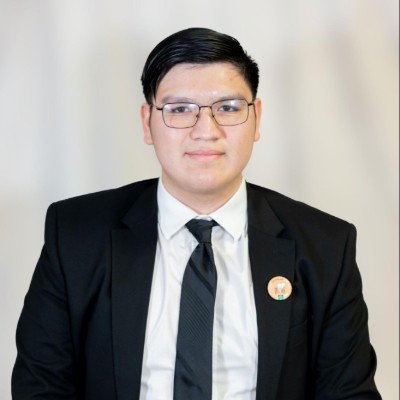
Alexis Lara
Alexis Lara, the newest winner of the Dreams Without Borders Scholarship, is starting his legal education at Texas Tech University School of Law. He hopes to use his degree to pursue immigration law, helping immigrant families safely navigate the legal system.
Read Their Essay Here:
Raised in a Mexican household in an American state, I felt conflicted about my identity. My Mexican parents likely felt the same when they came to the U.S. They had to adjust to American culture, whereas I had to adjust to American culture, Mexican culture, and the culture between the two. In-betweenness has made me partially feel like I do not belong to either culture. I eventually learned to feel safe within my in-betweenness and, after reading some of Gloria Anzaldúa’s works, I know I belong. I also felt a lack of belonging when I began college as a first-generation student. I worried about misunderstanding the rules or causing misunderstandings that disrupt the community. I also worried about encountering disruptions and how to recover afterwards. Now, as I am preparing to enter law school as a first-generation law student, I feel that same tug in my chest telling me to be careful.
Having thrived in unfamiliar spaces, I notice two factors that have allowed me to find a path towards success: safety and transparency. For my identity, I was able to find safe spaces online and in books that would allow me to learn about my cultures. In college, every class’s syllabus clearly stated policies and contact information for departments that deal with violations. These policies ensured I could confidently engage with my studies, free from danger. Safety policies created an environment where students can focus on their lives instead of fear. For people unfamiliar with college expectations, the transparency of these policies made it easy to avoid violating them. Rules, when presented transparently, make expectations known and accessible. Furthermore, the syllabi gave students a way to submit policy violations, should they seek a way to resolve unsafe situations. From my experience navigating unfamiliar spaces, I know transparency and safety are key factors for immigrants’ success in U.S. immigration law. However, recent violations of human rights by ICE pose a challenge.
Immigration law should improve the transparency and effectiveness of safety laws for immigrants, especially those in detainment. I know four steps that can start this process. First, transparent messages that explain how immigration law has changed or is changing will help immigrants who want to follow the law, follow the law correctly. Like a map, clear rules allow people to find and follow a route that works for them. Second, ensuring every detainee has an opportunity to use their habeas corpus right, and other due rights, will help reactively resolve dangerous detainment. Thirdly, faster and more effective enforcement of safety laws that currently exist can help ensure safety among immigrants or suspected immigrants. Fourthly, enacting proactive laws that prevent or avoid dangerous detainment of individuals before harm occurs would help, although passing and enforcing new laws can be difficult.
As issues of accountability and human rights abuses arise, showing immigrants how to navigate U.S. naturalization safely becomes increasingly important. Guiding immigrants will be my goal as an immigration lawyer.


Puerto Rico Office
Condominio El Centro II, 500 Avenida Muñoz Rivera, Suite 221B, San Juan, PR 00918

With offices in Herndon, Virginia, Montgomery Village, Maryland, and San Juan, Puerto Rico, Immigration Legal Advisors, PLLC provides legal help to clients in the areas surrounding Washington, D.C., including Frederick, Leesburg, Ashburn, McNair, Stone Ridge, Reston, Chantilly, Germantown, Woodbridge, Potomac, Gaithersburg, McLean, Falls Church, Manassas, Olney, Takoma Park, Arlington, Alexandria, Bethesda, Chevy Chase, Silver Spring, Hyattsville, College Park, Greater Landover, Bowie, Rockville, Montgomery Village, and Millersville.
Results listed are not a guarantee or indication of future case results.
© 2026 Immigration Legal Advisors, PLLC
1037 Sterling Rd., Suite 201, Herndon, VA 20170
571-441-2233
